

What is volleyball?
Volleyball is a game invented in 1895 in Holyoke, Massachusetts by William G. Morgan, a YMCA physical education teacher. Morgan's idea was a game played indoors by any number of players, taking some characteristics from tennis and handball. The game later evolved into what we now know as volleyball.
Playing the game
Volleyball is a game played by six players a side on a court with a net in the middle, separating the two teams. Each volleyball team attempts to score by putting the ball into play with a serve to the team on the opposite side of the net. A point is scored when the opposing team fails to return the ball and it touches the ground, goes out of bounds or is hit more than three times by one team.
A set is over when a team reaches 25 points with a lead of two (15 points in a deciding set, 21 in beach volleyball), and the match is awarded to the team that wins the most sets.
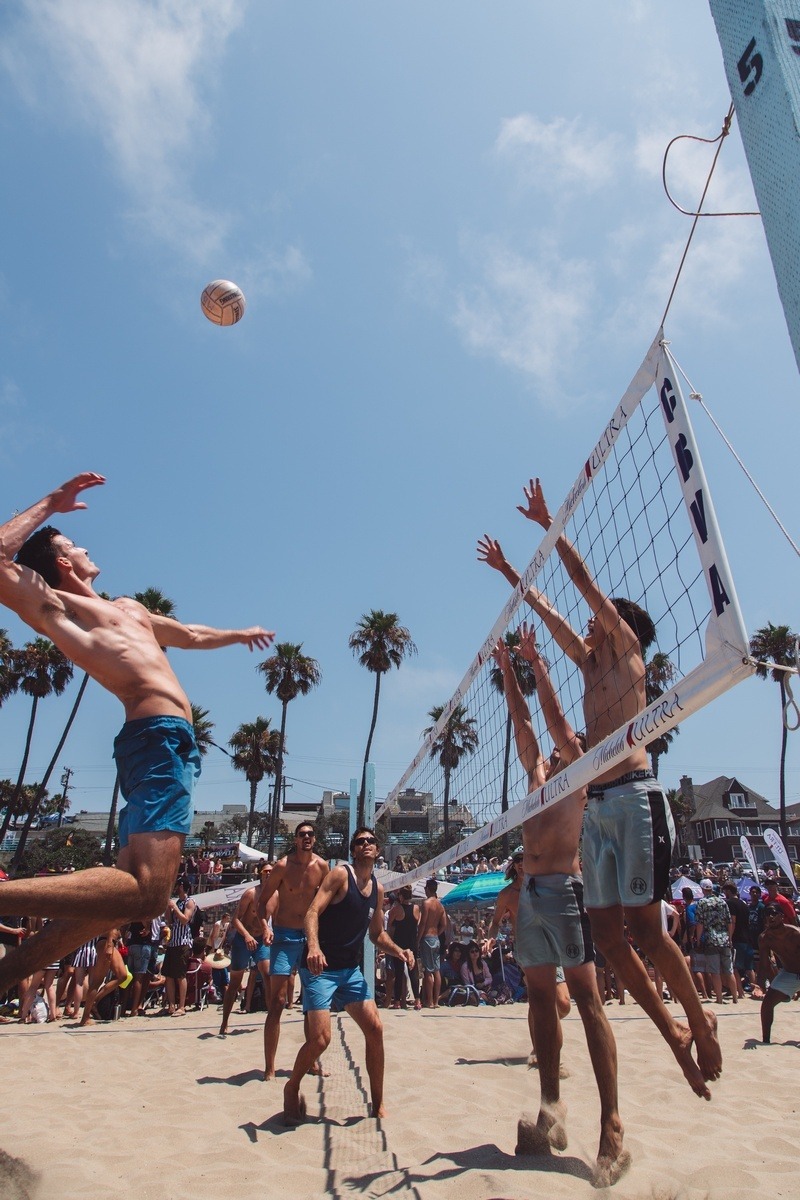
Volleyball glossary: volleyball terms from A to Z
Volleyball terms, lingo and jargon in one list. Once you can tell a dink from a dig, try the volleyball quiz.
A
- Ace
- bullet serve that quickly scores a point. A whizzer with WOW!
- Approach
- fast run by a spiker before jumping in the air.
- Assist
- awarded when a player moves the ball to another player who then is able to score.
- Attack
- an attempt to make the other team miss the ball, resulting in a point.
- Attack Block
- opposing player who tries to block a spike before it crosses the net.
- Attack Error
- a failed attack, resulting in a point for the opposing team.
- Attack Line
- line parallel to the net and 10 feet back from it. Players on the back row must jump from behind this line to spike.
- Attacker
- team member who tries for a team point by hitting or spiking the ball.
B
- Back Row Attack
- the act of a player in the back row who attacks the ball and attempts to score, usually in the form of a spike, taking off from behind the attack line.
- Back Set
- delivery behind a setter's back followed by a hit by an attacker.
- Back Zone
- the marked space behind the attack line.
- Backcourt
- term for the area from the end line to the attack line.
- Ball Handling Error
- call by a game official for a double hit, blocking error or centerline violation. You get but 1 shot at the ball: them's the rules!
- Ball In
- a ball is in when it lands inside or on any of the boundary lines.
- Beach Dig
- receiving the ball with an open hand.
- Block
- occurs when a player blocks an attack from opponents at the net.
- Block Assist
- occurs when more than one player blocks an opponent's attack.
- Bump
- the act of hitting the ball, on offense or defense, with both hands together, using the flat of the forearms to hit the ball into the air in order to advance play.
C
- Campfire Defense
- when a ball hits the floor, normally in a ring of defenders who look like they are standing around a campfire, amazed that the ball has touched the ground and no one defended it.
- Carry
- the illegal act of prolonging contact with the ball.
- Centerline
- the line running under the net, between the two posts.
- Centerline Violation
- the crossing of a player into the other team's half of the court.
- Chester
- being hit with the volleyball in the chest. Do I hear an Ouch?
- Closing the Block
- two players close in together to create a defensive block, so that the ball cannot pass between them.
- Cover the Hitter
- the act of teammates placing themselves around their own spiker, ready to retrieve the ball if the spike is blocked.
- Cross-Court Shot
- term for an attack hit from one side of the net diagonally to the opposite sideline of the opposing team's court.
- Crossing Space
- the space over the net where the ball must cross in order to be in play.
- Cut Shot
- a spike that is traveling at a sharp angle across the net to the opposition.
D
- Dead Ball
- a ball no longer in play, declared dead by an official.
- Decoy
- term for an offensive play meant to camouflage the spiker.
- Deep Dish
- a set where the player maintains control of the ball for a prolonged and illegal period of time. An extreme version of a carry.
- Deep Set
- term for a set placed away from the net, a strategic play to put off the timing of opposing blockers.
- Dig
- retrieving a ball that has been spiked or hit into your area, typically occurring low to the ground and resulting in a successful pass to a teammate. When successful, a smooth move!
- Dink
- jargon for a push of the ball around or over opposing blockers.
- Double Block
- a team of 2 players creates a strategic move to deflect an attacked ball.
- Double Quick
- a team of 2 hitters moves towards the setter for a quick inside hit.
- Double Touch
- the act of a player touching the ball twice in a row, resulting in a point for the other team.
- Doubles
- term for a 2-player team on each side, usually a beach volleyball game.
- Down Ball
- jargon for a ball in play that the blockers judge will not be spiked hard, so they stay down rather than jump to block.
F
- Facial
- a spike that makes contact with an opponent's face. A very big OUCH!
- Fish or Tuna
- a player who is entangled in the volleyball net.
- Five Set
- includes a right front hitter and a back set.
- Five-one
- offensive strategy using 6 players, to include 5 hitters and 1 setter.
- Floater
- a serve that does not spin, is flat and is seen fluttering, dropping or changing direction.
- Foot Fault
- the act of putting your foot on or over the end line when serving.
- Forearm Pass
- occurs when the arms, from the elbows to the wrists, are joined to hit the ball in an underhand motion.
- Foul
- game rules violation.
- Four-two
- offensive strategy using 6 players, to include 4 hitters and 2 setters.
- Free Ball
- a weak attack that is easy to return by the opponent.
- Friendly Fire
- the act of being hit in the head by a teammate serving behind you.
- Front Zone
- the area in front of the attack line.
H
- Heater
- a hard deliberate spike. It's a pounder!
- Held Ball
- a foul occurring when the ball stops during contact.
- Hit
- the act of hitting the ball.
- Hitter
- refers to the spiker or attacker.
- Hitting Percentage
- calculated as kills minus attack errors, divided by attempts.
I
- Interval
- time between sets, usually three minutes.
- Isolation Play
- strategic move to isolate an attacker against a single defender.
J
- Joust
- occurs when 2 opposing players battle together for a ball above the net.
- Jump Serve
- term for a serve where the player tosses the ball upwards, followed by a quick jump up to hit the ball downwards.
- Jungle Ball or Picnic Volleyball
- game played by inexperienced players.
K
- Key
- attempt to predict the opposing team's next play.
- Kill
- the act of hitting the ball with great force into the opponent's court, winning the point. One of the most exciting plays of the game and a definite crowd pleaser.
- Kneepads
- pads worn by players to protect the knees when making contact with the floor during digs.
L
- Let Serve
- occurs when a serve touches the net. Results in either a ball in play if it goes over the net, or a dead ball if it stays in the serving team's court.
- Line
- marked boundaries of a volleyball court.
- Line Judge
- official posted at a corner of the court who judges whether a ball is in or out of bounds.
- Line Shot
- occurs when the ball is spiked down the opponent's sideline, close to the hitter and outside the block.
- Lip
- a successful dig. Another crowd pleaser worth applause!
M
- Match
- a series of sets: best of five in the indoor game, where the first team to win three sets wins the match, and best of three in beach volleyball and some leagues.
- Middle-back
- defensive strategy using the middle back player to cover deep spikes.
- Middle-up
- defensive strategy using the middle back player to cover dinks or short shots.
- Mintonette
- original name given to the game by William Morgan, its inventor.
- Multiple Offense
- strategy whereby a team mixes up different tactical plays against opponents. Keep 'em guessing, yes?
N
- Net
- refers to the net between the two sides that the ball must travel over.
O
- Off-speed Hit
- spiked ball not hit hard, but with spin.
- Officials
- enforcers of the rules who judge the game as it happens and award points.
- Outside Hitter
- attacker who hits from the left or right front, near the edge of the court.
- Overhand Pass
- passing with both hands open, utilizing fingers and thumbs.
- Overhand Serve
- serving the ball with a motion above the shoulder.
- Overlap
- foul called when players are out of their rotation positions at the moment the ball is served.
P
- Pancake
- occurs when a player dives and slides one hand, palm down, flat on the floor, so that the ball bounces up off the back of the hand.
- Passer
- a player who passes the ball to a teammate, usually the setter.
- Penetration
- occurs when reaching across the net to block a hit.
- Points
- the result of a successful rally. Worthy of cheers and yeahs!
- Power Alley
- term for a long hit that avoids the spiker and moves to the farthest point of the court.
- Power Tip
- ball hit with maximum force by an opposing team player.
Q
- Quick Set
- timely move between setter and hitter team members. A 1-2 step of set and hit against the opposing team.
R
- Rally
- the play from the serve until the ball is dead. The team that does not let the ball touch the ground or go out of bounds is the winner of the rally. The longer the rally, the longer the excitement and suspense for the fans!
- Ready Position
- player preparing to make ball contact.
- Reception Error
- occurs when a serve is not returned and results in an ace for the opposing team.
- Red Card
- a penalty for misconduct, more severe than a yellow card. It results in a point and the serve for the opposing team.
- Roof
- spiked ball that is blocked by the opposing team and quickly lands on the attacker's side of the court.
- Rotation
- the pattern in which players move one position clockwise on the court when their team wins back the serve.
S
- Scorekeeper
- the keeper of the official point tally.
- Screening
- blocking the defending team's view of the server.
- Serve
- the act of hitting the ball into play at the beginning of each rally.
- Server
- team member who places the ball into play.
- Service Error
- a failed serve resulting in a point for the opposing team.
- Service Winner
- a successful serve resulting in a point for the serving team.
- Set
- strategy move to set the ball skillfully so that a team member can spike it.
- Setter
- a player who specializes in setting up teammates to attack.
- Side Out
- loss of serve by one team, resulting in the serve being given to the other team.
- Sideline
- the side boundary on the volleyball court.
- Six Pack
- blocker is struck in the face or head by a spiked ball.
- Six-two
- strategy using 6 players, to include 2 setters that change positions, whereby one player moves to the front as a hitter and the other moves to the back as the setter.
- Smash
- a hard hit ball with high velocity.
- Spike
- the act of hitting the ball above one's head with great velocity into the opponent's side of the court.
- Spiker
- one who is designated to spike. Likely, the star of the game!
- Strong Side
- the left-front position for a right-handed hitter, or the right-front position for a left-handed one. See Weak Side.
- Stuff
- jargon for a block.
T
- Time Out
- stoppage of play called by one team.
- Tip
- the act of using the finger tips to tip the ball across the net.
- Turning In
- blocker turning towards the court to direct the ball in-bounds.
U
- Underhand Serve
- a serve where the ball is held or tossed low with one hand and hit from below with the closed fist of the other.
V
- Volley Pass
- the passing of the ball to a teammate using the fingers.
W
- Weak Side
- occurs when a right-handed player is hitting from the right-front position, or vice versa.
- Wipe
- occurs when a hitter moves the ball off the opponent's block in order for it to go out of bounds.
Y
- Yellow Card
- the first warning for misconduct, determined by a referee. The combination of a yellow and a red card being shown results in ejection from the game.
- Yips
- bad case of nerves resulting in shakes that make it very difficult for a gamer to play well. This phrase can be used in reference to many games and is recognized by both players and fans alike.
More about volleyball
Mintonette, the first Olympic golds and the birth of beach volleyball are in the volleyball trivia, and the volleyball quiz has 10 questions on the terms above.
Betting on the match? Read the sports betting terms first. Or browse all sports games.